
"coffee growth stages"
2000 article(s) found
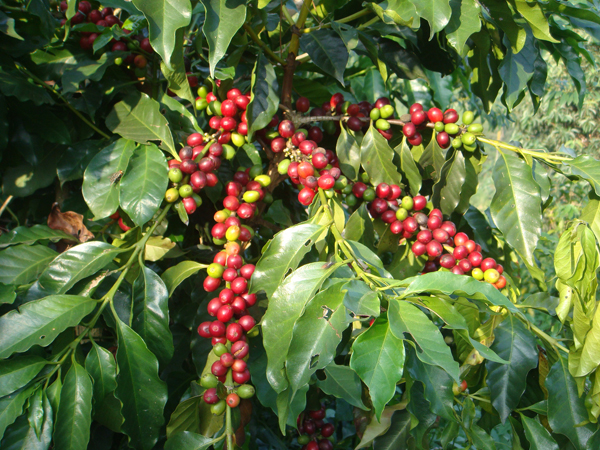
Explain the planting and cultivation of coffee trees in detail to understand the growth environment and needs of coffee trees.
(1) Seedling propagation Coffee seedling propagation can be divided into seed propagation and asexual reproduction. 1. Seed propagation (1) seed collection, seed washing and seed storage during the full ripening period of coffee (the full ripening period of medium-grain coffee in Hainan Island is from February to March, and that of small seed is from September to November). The fully ripe fruits are picked from strong and high-yielding mother trees to make seeds. Immediately after the fruit is harvested, peel and wash the seeds. The method is to place the fruit.

The past Life and present Life of Baoshan Coffee the Story of the Development of Baoshan Coffee
Professional coffee knowledge exchange more coffee bean information Please pay attention to the coffee workshop (Wechat official account cafe_style) Baoshan, as one of the first areas in Yunnan to grow coffee, has been planting on a large scale since the 1950s and has a history of more than 60 years. According to exact historical records, Baoshan Coffee was first made in 1952 by the tropical and subtropical classics of Yunnan Province in the Gaoligong Mountain Resort.

How commercial coffee beans are baked _ how commercial coffee beans are cooked _ report on the price of commercial coffee beans
Professional coffee knowledge exchange more coffee bean information Please follow the coffee workshop (Wechat official account cafe_style) commercial coffee raw beans, after roasting, become cooked coffee beans (roasted beans), resulting in a unique color, aroma and taste. The heat is high when baking.

At what age can I have coffee?
One day, he ran up to me with a children's popular science book and blinked big eyes and asked me, "is coffee really poisonous?" My mother drinks coffee every day. I'll tell her! "

How do you make coffee beans? What has it experienced from coffee beans to coffee?
Professional coffee knowledge exchange more coffee bean information Please follow the coffee workshop (Wechat official account cafe_style) many people like to choose a coffee shop, choose a quiet seat, close their eyes and put on headphones, order a cup of coffee, and quietly feel the moisture in the rain; and if you want to get a cup of warm coffee, you have to take time to wait for it to be mastered, you know.

Cultivation techniques of small-grain coffee: irrigation and fertilization
Fertilization is one of the key measures for high yield of cultivated coffee. According to the data, for every 1 kg of dried beans harvested, coffee trees absorb 70 grams of nitrogen, 14 grams of phosphorus and 76 grams of potassium from the soil.

The second Yunnan Coffee Cup China Cooking Competition ended successfully in Kunming in the southwest division of the competition.
Yunnan is the largest coffee producing area in China, accounting for 98% of the country's coffee output. The boutique coffee beans of many coffee farms have gone abroad and stepped onto the world coffee stage. Xinhua News Agency, Kunming, August 15 (Ji Zhe Peng, Zhang Ruoyu) the second Yunnan Coffee Cup China Brewing Competition ended successfully in Kunming on the 14th, with one champion and one runner-up and one Yunnan finger at the same time.

The first national competition in China's coffee industry! The 2018 National barista Competition opens in August!
Professional coffee knowledge exchange more coffee bean information please follow the coffee workshop (Wechat official account cafe_style) July 27,2018 by the all-China Federation of supply and Marketing Cooperation Vocational skills Evaluation and guidance Center, the Ministry of Human Resources and Social Security China Employment training and guidance Center, the China Business and Economic Association Coffee Branch hosted the 2018 China skills Competition the first national coffee

Cultivation techniques of Coffee Tree Seedling Propagation and Establishment of Coffee Garden
(1) Seedling propagation Coffee seedling propagation can be divided into seed propagation and asexual reproduction. 1. Seed propagation (1) seed collection, seed washing and seed storage during the full ripening period of coffee (the full ripening period of medium-grain coffee in Hainan Island is from February to March, and that of small seed is from September to November). The fully ripe fruits are picked from strong and high-yielding mother trees to make seeds. After the fruit is harvested, peel and wash the seeds immediately. The method is to remove the fruit.

Production cycle, process and origin of coffee beans
The production cycle of coffee beans the coffee beans raised by young adults in the year of drinking should be sealed and preserved as soon as possible. The peak stage of coffee bean flavor usually lasts only 2-3 weeks, no more than 1 month at most, so we can also think that the shelf life of coffee beans is 1 month. Of course, through some artificial means, for example
Cultivation and cultivation of High-quality Coffee
(1) Seedling propagation Coffee seedling propagation can be divided into seed propagation and asexual reproduction. 1. Seed propagation (1) seed collection, seed washing and seed storage during the full ripening period of coffee (the full ripening period of medium-grain coffee in Hainan Island is from February to March, and that of small seed is from September to November). The fully ripe fruits are picked from strong and high-yielding mother trees to make seeds. Immediately after the fruit is harvested, peel and wash the seeds. The method is to place the fruit.
Planting techniques of small Coffee trees in Yunnan: irrigation and fertilization
Fertilization is one of the key measures for high yield of cultivated coffee. According to the data, for every 1 kg of dried beans harvested, coffee trees absorb 70 grams of nitrogen, 14 grams of phosphorus and 76 grams of potassium from the soil.

Coffee chain joining-- Analysis of Coffee Entrepreneurship Market
The international coffee market is in the mature stage, and many people do not know that coffee beans are the second largest trading commodity in the world. Coffee is produced in more than 70 countries with an annual output of 1 million bags. the development of the coffee industry provides employment opportunities for 100 million people around the world. The coffee production of the exporting member countries of the International Coffee Organization accounts for more than 97% of the world's total output. While annual retail sales exceed 70%.
Coffee beans History the birth of coffee beans
The lifetime of a coffee tree takes 3-5 years from planting to fruiting. 6-10 years of coffee trees are the most likely to bear fruit, about 15-20 years, is the harvest period. Coffee trees are usually bred in nurseries and grow into saplings, and then moved to coffee farms a year later, in full compliance with the way the Arabs planted and cultivated coffee trees. Coffee trees will continue to decline in the first four or five years of growth.

The treatment process and spread of raw coffee beans
Roasted coffee beans appeared on the market for the first time-coffee trees in 1865 (Pittsburgh, USA) usually grew to 5-10 meters tall. the older the coffee tree, the fewer branches, but more and more leaves and fruit. Coffee trees usually begin to bear fruit three to four years after planting. The number of years in which the coffee tree produces fruit, depending on the region planted and the tree species.
Roasting experience sharing in-depth analysis of coffee roasting skills and basics
Roasted coffee transforms the chemical and physical properties of raw coffee beans into roasted coffee products. The roasting process causes raw beans to expand and change their color, taste, smell and density, resulting in the special flavor of coffee. Unroasted coffee beans and roasted coffee beans contain similar acidity, protein and caffeine, but lack their good taste. The process needs enough heat to speed up beauty.

The struggle among the three factions of Chinese cafes in the Internet era
Quickly expand the cafe, carving time into the Internet, Starbucks to do direct camp, coffee with you, diffuse coffee and other Korean coffee is still busy to join, behind the mellow coffee shop, the market competition has entered a white-hot stage. Titanium media note: China's current per capita annual coffee consumption is 5 cups, which is far lower than the annual per capita level of about 300 cups in Japan and South Korea.

Ready-to-drink Coffee Market: a New Blue Ocean being excavated
In the past two years, when the whole beverage industry bid farewell to the golden era of high growth, coffee consumption showed a rapid growth trend, and China's coffee market is growing at an annual rate of 15% and 20%. Both the leisure coffee chain represented by Starbucks and the instant coffee represented by Nestl é have made rapid development. And the scale of China's coffee consumption market is about to break through.
The birth of coffee beans (1) Coffee trees from planting to fruiting
Coffee trees take 3-5 years from planting to fruiting. 6-10 years of coffee trees are the most likely to bear fruit, about 15-20 years, is the harvest period. Coffee trees are usually bred in nurseries and grow into saplings, and then moved to coffee farms a year later, in full compliance with the way the Arabs planted and cultivated coffee trees. Coffee trees will continue to take root downward and upward in the first four or five years of their growth.
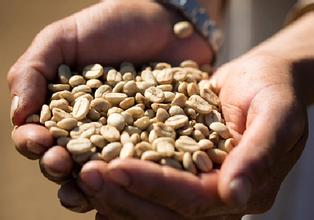
The latest introduction to the treatment of coffee raw beans
Raw coffee beans are the seeds of coffee trees. It is the wealth hidden in coffee cherries (coffee berries) that people usually call coffee cherries. They are mistakenly called beans because they are similar to the beans we usually see, but they are actually the seeds of coffee. Usually there are two flat oval coffee beans in the coffee berries, and there is only one in a few coffee berries.